
Slots are the easiest casino games to start and some of the hardest to understand properly. You do not need to memorize a strategy chart or make complex decisions, but you do need to understand RTP, volatility, paylines, bonus features, and bankroll pacing. Without those basics, every slot looks like a colorful mystery box.
For the math behind those game screens, read Slots RTP Explained before comparing casinos.
This beginner guide explains how online slots work, how to read the numbers, and why a calm budget plan is more useful than chasing a “hot” machine.
What Is a Slot?
A slot is a game where the result is determined by random or pseudo-random processes, usually through an RNG in online games. Older mechanical slots used reels and physical mechanisms. Modern online slots use software, animated reels, bonus rounds, multipliers, expanding symbols, jackpots, and thousands of possible ways to win.
The basic idea has remained surprisingly durable: place a bet, spin, and receive a payout if the final symbol combination matches the paytable. The presentation changed from metal levers to mobile screens, but the math still lives in the paytable.
A Short History: From Liberty Bell to Mobile Slots
The slot story often begins with Charles Fey, a San Francisco mechanic who built early coin-operated gambling machines in the 1890s. His Liberty Bell machine became famous because it used a simple three-reel design and automatic payouts. Charles Fey historical resources describe the Liberty Bell mechanism as having 1,000 possible combinations, a reminder that slots have always been mechanical entertainment wrapped around probability.
Today the reels are digital, the themes are cinematic, and a single game can include free spins, cascading wins, bonus buys, and progressive jackpots. But the player question is still the same: what am I risking, what can I win, and what is the long-term expected return?
RTP: Return to Player
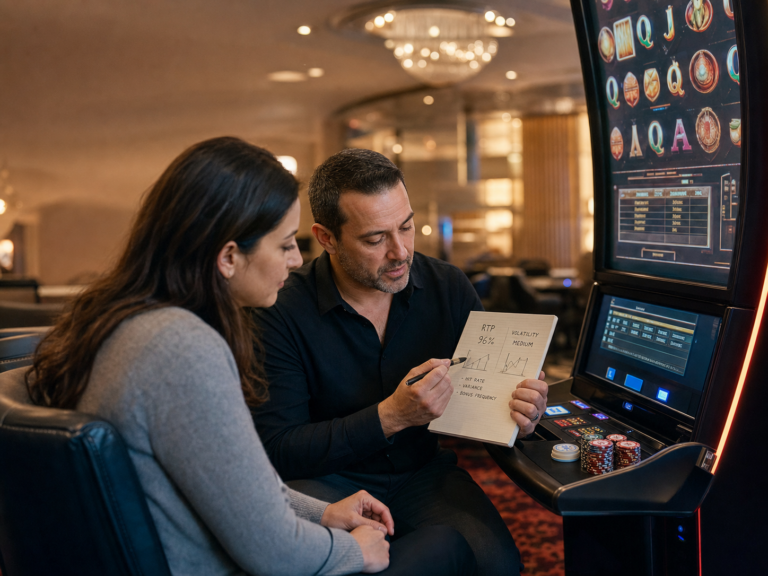
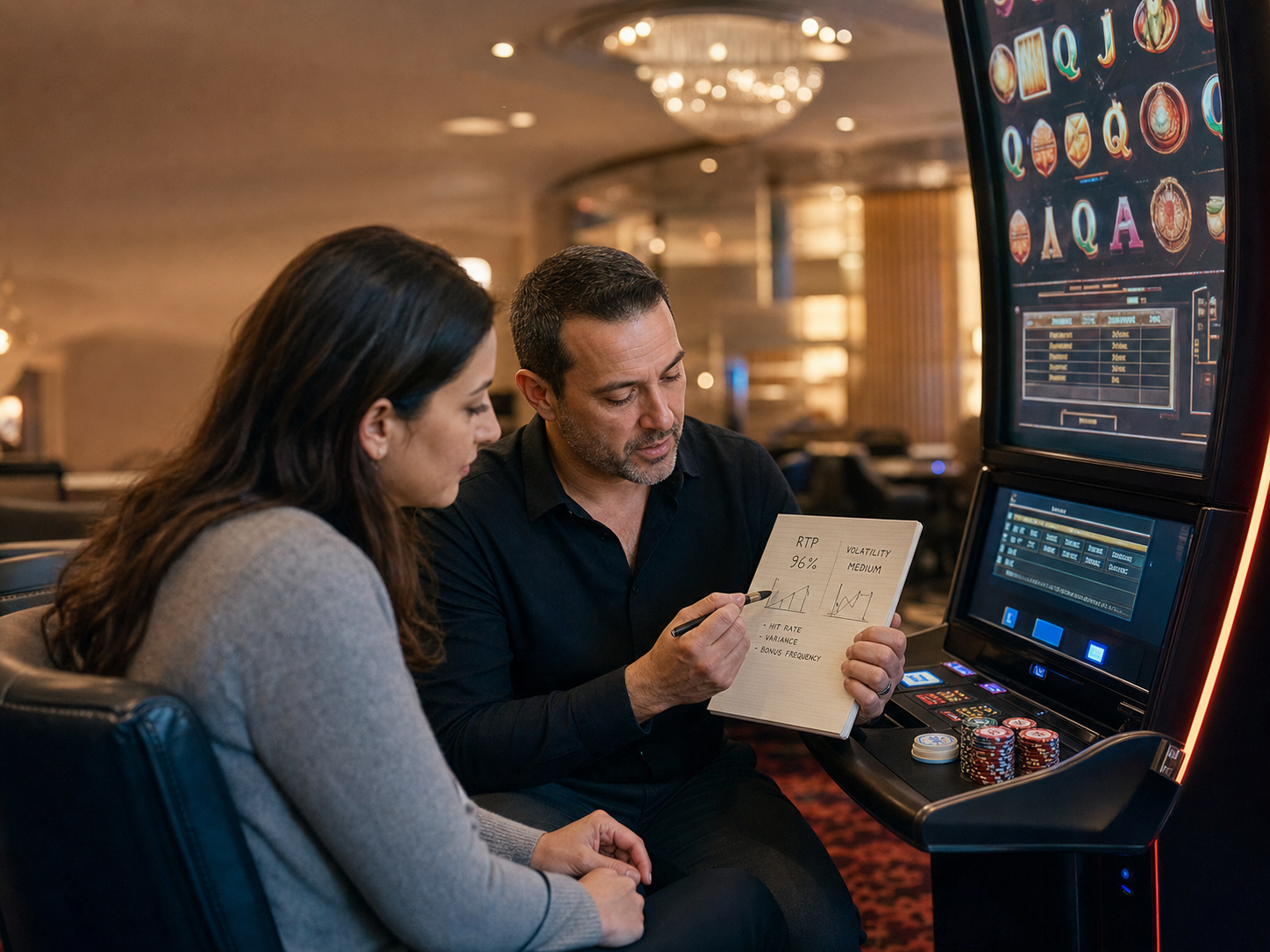
RTP is the theoretical percentage of wagered money returned to players over a large number of plays. A 96% RTP slot is designed to return $96 for every $100 wagered in the long run, leaving a 4% theoretical house edge.
The important warning: RTP is not a session guarantee. The UK Gambling Commission explains that RTP is an average over a significant number of game plays, not what a player should expect every time they use a machine. A random slot does not know that you lost the last ten spins and therefore “owe” you a win. Each spin is governed by the game’s math and RNG process.
RTP Example
Imagine two players each wager $500 over time:
- Player A chooses a 96.5% RTP slot. The theoretical loss is 3.5%, or $17.50.
- Player B chooses a 94% RTP slot. The theoretical loss is 6%, or $30.
Either player could win or lose much more in one session. But across huge volume, the higher RTP game is mathematically cheaper entertainment. That is why RTP should be part of game selection, especially when wagering casino bonuses.
Volatility: Why RTP Is Not Enough
Two slots can both have 96% RTP and feel completely different. Volatility describes how wins are distributed.
- Low volatility: More frequent smaller wins. Better for longer sessions with smaller swings.
- Medium volatility: Balanced hit frequency and payout size.
- High volatility: Fewer wins, larger potential payouts, bigger bankroll swings.
A high-volatility slot can drain a small bankroll even if the theoretical RTP is respectable. Beginners often enjoy low or medium volatility because the session rhythm is easier to understand. High volatility should be approached with smaller bets and a clear loss limit.
Paylines, Ways, and Cluster Pays
Traditional slots use paylines: fixed lines across the reels where matching symbols create wins. Many modern slots use “ways to win,” where matching symbols on adjacent reels pay regardless of exact line position. Cluster pays games reward groups of matching symbols touching each other.
The format changes how the game feels, but the paytable remains the source of truth. Before playing, open the info screen and check:
- RTP
- Volatility if listed
- Minimum and maximum bet
- Paytable for top symbols
- Bonus trigger rules
- Whether a jackpot is fixed or progressive
Bonus Features
Bonus rounds also connect directly to Free Spins Guide, especially when promotions use selected slots.
Common slot features include wilds, scatters, free spins, multipliers, respins, expanding symbols, sticky symbols, and bonus-buy options. These features make slots entertaining, but they also affect volatility. A game where much of the RTP is locked inside rare bonus rounds may feel dry until the feature lands.
Bonus buys deserve caution. Paying 50x, 100x, or more to trigger a feature can create very fast bankroll swings. Some jurisdictions restrict or prohibit certain fast-play or bonus-buy mechanics. Even where allowed, beginners should treat them as high-risk entertainment, not shortcuts.
Progressive Jackpots
Progressive slots feed a small part of wagers into a growing jackpot pool. The prize can become enormous, but the chance of winning is usually extremely low. Progressive games may also have lower base-game RTP because value is concentrated in the jackpot.
If you play progressive slots, check whether the jackpot requires maximum bet eligibility. Some games only qualify you for the top prize if you bet at a certain level. Never raise your stake beyond your budget just to chase eligibility.
Bankroll Plan for Slot Beginners
If session pacing is your main concern, pair this section with Casino Bankroll Management.
A simple slot bankroll plan has three numbers:
- Session budget: The amount you can afford to lose as entertainment.
- Bet size: Usually 0.5%-2% of the session budget for beginners.
- Stop point: A time, loss, or win point where you leave.
If your session budget is $100, a $0.50 to $1 spin is easier to manage than $5 spins. At $5 per spin, 20 losing spins can end the session. At $0.50, the same sequence costs $10. Smaller bets do not change the RTP, but they give variance more room to breathe.
Myths to Avoid
- “The slot is due.” Random slots do not become due after losses.
- “A cold slot will heat up.” Past spins do not reliably predict future spins.
- “Higher bet means better odds.” Usually bet size changes payout size, not the underlying odds, except in specific jackpot eligibility rules.
- “RTP means I get 96% back today.” RTP is a long-term average, not a session promise.
Slots and Casino Bonuses
Slots usually dominate bonus wagering because they often contribute 100%. If you have a $100 bonus with 30x wagering, that means $3,000 in qualifying wagers. At $1 per spin, that is about 3,000 spins. At $0.50, it is about 6,000 spins. If the slot RTP is 96%, the theoretical cost of $3,000 wagering is around $120, though actual results can vary sharply.
This is why bonus terms and slot math belong together. A high wagering requirement can turn a fun slot session into a grind.
FAQ
What RTP should I look for?
Many players prefer slots around 96% RTP or higher when available, but RTP is only one factor. Volatility, bet range, bonus mechanics, and personal budget matter too.
Are online slots rigged?
Licensed markets require game testing and ongoing performance checks. That does not mean players have an advantage. It means the game should operate according to its published math and technical standards.
Can strategy beat slots?
Not in the way basic strategy affects blackjack. Slot “strategy” is mostly game selection, bankroll control, bonus-term awareness, and knowing when to stop.
Sources and Further Reading
- UK Gambling Commission: return to player explained
- UK Gambling Commission: online game fairness
- Charles Fey: Liberty Bell slot machine history
- Britannica: Charles August Fey
A Sample Slot Session Plan
Suppose your session budget is $80 and you want at least an hour of play. If you choose $2 spins, forty losing spins can end the session. That can happen quickly on a high-volatility game. If you choose $0.40 spins, the same forty-spin downswing costs $16, leaving room for the normal rhythm of wins, dead spins, and bonus attempts. The lower stake does not make the game more profitable, but it makes the experience more controllable.
A practical plan might be: $80 budget, $0.40-$0.80 spins, stop if the balance falls to $40, cash out or pause if the balance reaches $130, and no bonus buys. This kind of plan sounds less exciting than “chase the feature,” but it is exactly what keeps gambling in the entertainment category.
Reading a Slot Paytable Like a Reviewer
Before writing or publishing slot reviews on Casino101, check whether the game displays RTP in the help screen, whether different RTP versions exist, how the bonus is triggered, what the maximum exposure is, and whether the game includes unusually fast mechanics. Some providers offer the same slot at different RTP settings to different operators. If a review says only “this slot has 96% RTP” without checking the version, it may be misleading.
Slots and Historical Storytelling
The Liberty Bell story is useful because it shows how simple slot design used to be: a limited set of mechanical combinations and a visible payout idea. Modern games can be beautiful, but they are also more opaque. Cascading wins, multipliers, and bonus rounds can make it hard for beginners to understand where the value sits. A strong slots article should therefore combine story with numbers: explain the fun, then explain the math.
Internal Reading Path
This article should link forward to Slots RTP Explained, Slots Volatility Explained, Free Spins Guide, Best Slots Casinos, and Wagering Requirements Explained. Those articles should link back here for beginner context. That creates a slots SEO cluster where readers can move from basic rules to math, then to bonus evaluation and casino selection.
Slots beginner next-step note
Once the basic rhythm of reels, paylines, RTP, and volatility makes sense, the next practical move is How to Choose Slots Casinos. That page turns the same math into a casino-selection checklist instead of treating every big slot lobby as equal.